Showing posts with label Tanzania. Show all posts

15 March 2016

Safari - Lions, elephants and hypo snacks

Happy place! 
Many people ask why we moved here, but for us, the opportunity was a no-brainer. We are wildlife obsessed, and the chance to live here meant safari, and Tanzania is where you want to be for animals. I think I am now the world expert on going on safari with T1D!

Here in Arusha, we are at the gateway to Northern Tanzania. Kilimanjaro is to the East, and the Serengeti to the West.  Forested Arusha National Park is a 1 hour drive from our house, elephant-rich Tarangire National Park 1 and a half hours, beautiful Lake Manyara National Park 2 hours and the famous Ngorongoro Crater 3 hours away. All the cliche African wildlife experiences can be had here on a Friday night weekend getaway...  I still have to pinch myself to believe that we live here. Oh I should have warned earlier, this is a major brag post!

Wildebeest migration. 
Living here we have three options for safari; self-drive, guided or fly. I am incredibly spoiled in that I have been able to tag along with Jarrod on his flights and overnights to the Serengeti. We have stayed in little tents, luxury tents, lodges... The great thing about Tanzania is that none of the camps are fenced, so seeing elephants or hearing lions and hyena outside your tent is all a part of the experience. I will never forget my first African camping trip; I made the mistake of offering to watch our friends baby and kids while the others set up the tents... I felt very vulnerable sitting with a squealing baby and chatty kiddies, knowing lions could be somewhere nearby in the darkness! Shining your torch around... lots of eyes reflect back, hopefully zebra and impala.


Of the challenges I have had to face going on safari, the biggest has to be hypo snacks. Sleeping in a tent, luxury or not, they are strict on the no-food policy, and for good reason. One of my friend's cars was smashed open by a hungry elephant who could smell fruit in the vehicle! This is a tricky one to get around, so my tip is to pack a plastic, seal-able tuppaware type container for any snacks. Keep simple plain snacks in your tent that don't smell too sweet - such as plain crackers and sweets (no fruit or meat). Glucose tabs would probably be a good option here (ugh). Give any additional snacks to the kitchen to store for you to collect at the beginning of each day. Or pack in the car, again, in seal-able containers.

Refrigeration of insulin and glucagon is another challenge. I think it's wise to travel with glucagon - you are in a very remote place. If you are with a safari company, many of their cars have a little fridge. If we are self-driving we have a cooler box with frozen bottles. For longer trips we are looking at investing in a Engel fridge. Jarrod is very keen to get one of these for my insulin... but I think he is mostly excited about a new gadget.

Mama cheetah and cubs. 
Another thing that struck me was be prepared to get stuck. I don't think this happens too often, but you do hear about cars getting stuck in the mud overnight, or even lost for several days (one of our guides rescued a group that had been lost for 2 days!). When I heard this I felt so vulnerable, and realised that I need to be responsible for always having my own food supply in the event that this might happen. Others might last a couple of days without food... I am not sure what would happen to my diabetic body. As such, now I always make sure I have a couple of full packets of decent crackers, dried fruit, nuts, juice boxes and biltong (dried meat).

If you plan on safariing, get used to injecting with the bumpy roads known as the "African massage." Let's just say I have become an expert at pinch, look away and stab. Not cool.

My last tip is to communicate. My husband Jarrod enters some kind of a state of safari frenzy and never notices if I am chowing down on sweets. I need to get better at telling him that I don't give a **** about that baboon riding a zebra right now, because I am busy hypo-ing. All things to learn! Another thing I learnt is that self-driving and having a huge male lion walk past and make eye-contact, about 2 meters away, causes a massive release of sugar into the blood-stream! My electric window was not fast enough.

This is such an amazing place. Sometimes I wonder what we are doing here... am I am crazy depriving myself of easy access to medical care, support and technology? Then I remind myself of the incredible things we have seen and done, and how much more we have to see, and it is so, so worth it.


24 February 2016

Check-Ups in Nairobi - Getting Care in East Africa

Land border crossing between Tanzania and Nairobi - legitimate excuse for
procrastinating an endo appointment right? 
Last week I traveled to Nairobi, Kenya, for my first big check-up since being in Tanzania, and since being diagnosed. Unfortunately the checkups and advice needed for my diabetes care isn't easily accessible in Arusha. I had one appointment with the endocrinologist at the hospital here, but the long queues of forlorn people outside his door made it clear that it would be difficult to get much of time in the face of such overwhelming need. As such, it is necessary to travel to Kenya for what I need.

High security in "Nairobbery." 
I had heard the private health care in Kenya is world-class, and on the advice of colleagues, booked to see the endocrinologist at the Aga Khan University Hospital in Nairobi. The Aga Khan Hospitals are funded by the Aga Khan, the philanthropist leader of Ismaili Muslims. The service funds hospitals in Kenya, Tanzania (Dar es Salaam), Pakistan, India, Uganda and Tajikstan, and aims to support low-middle income earners in developing countries. I was so impressed by the care I received and I have heard expats saying that it surpasses what they would receive in their home countries. My consultation was only $35 and while this unaffordable for most people in the region, it is significantly cheaper than I would face in the private system at home. The hospital had gardens for patients and was very clean and modern, the staff were friendly and all services and appointments efficient. My endocrinologist was thorough, knowledgeable and kind, and she allayed all my fears and nerves about my first big check-up.

While the drive to Nairobi from Arusha is less than 300km, I had been advised to take a shuttle bus to avoid driving in Nairobi's infamous traffic and to save border crossing issues with a private car. This was a good tip given the navigation and terrifying driving in Nairobi. 8 hours travel for 300kms for an endo appointment is longer than I would like... but it is better than many people in the world have access to. While waiting around for tests and appointments I made the most of Nairobis modern shops and food, stocking up on supplies such
 as decent shampoo and cooking ingredients.

So to summarise my first big check-up as a diabetic - terrifying, adventurous, and oh yeah, terrifying again. I was a bundle of nerves, self-judgement and anxiety for weeks leading up to this. Other T1s, do you all find it so nerve-wracking?! At least in the future I know I can reward myself with Nairobi food and shopping, seems only fair right? X

I was pretty happy when we found an Asian
restaurant... #small things. :)
When you have been in Arusha for a year and a half,
even Nairobi is a foodie holiday. 
The "African massage" is not so great for diabetics.
Trying to psyche myself up to jab on bumpy African
roads is always fun, but I am becoming an expert.  

2 February 2016

Kutembea. To walk. Hiking in Tanzania.

Injecting for lunch at the summit of Longido. 
Hiking, or tramping as we call it in New Zealand, is such a passion of mine. I love being in the forest and being on your two feet is the best way to explore. I have found this a huge adjustment living here. While people from London are in awe of the outdoor lifestyle that Tanzania has to offer, it is a far cry from what I am used to! That said, it is a goal of mine to make the effort to hike/climb a few more of the mountains here this year.

One of the things I love most about hiking in a new country are the glimpses you get into people's everyday lives. You get to see into homes, and if you are lucky, be invited in. People want to talk to you and the kids chase you. Here in Tanzania people apologise ("pole!") that you have to walk! When I was hiking in the Usambarra mountains my guide told me that the people felt pity for me that I could not afford the bus... A huge cultural difference to be walking as a luxury! 

Hiking is easy in Tanzania if you are organised yet flexible. There are almost no maps, and you nearly always have to take a guide or a ranger and often pay village fees. If you are willing to do this, the country is at your fingertips.

Almost at the top of Longido. 
On Sunday I camped with some friends at Longido, about an hour from Arusha. The camp site was cliche Africa and I only had one scorpion under my tent and a measly 4 thorns straight through my shoe into my foot. After a night of scorpion dreaming we hiked/climbed up Mt Longido. It was 4 1/2 hours straight up with a hands and knees scramble/climb to the summit, and about three hours down. I love imagining the creatures around me in the forest as we trekked past elephant poo and a leopard footprint! It is amazing how much energy hiking uses. I miscalculated my long-acting insulin the night before so had to suck sweets constantly on the climb, and I should have carried much more sugar with me.I  would love to hear from other diabetics how they adjust their insulin for all day exertion?

Here's to this being the first of many 2016 mountain hikes. Let it be the year of Meru, Oldonyo Lengai and fingers and toes crossed for Mt Nyiragongo in Congo.  


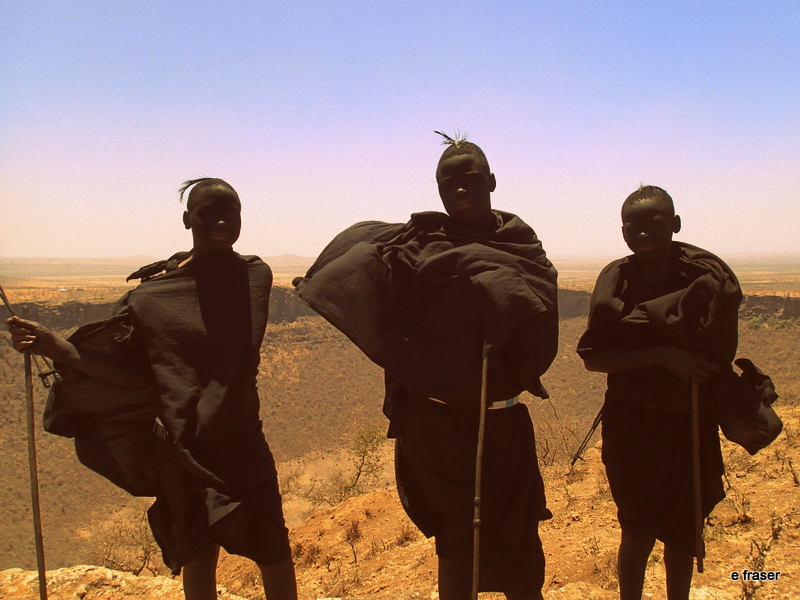
Maasai land
Maasai land.

Big trees hiking in Usambarra mountains. 
Shimo la Mungu crater. 
Big mountains in Usambarra. 


17 January 2016

Kufundisha. To teach.

My classroom. 
I love the reaction that people give me when they find out that I teach in Tanzania. People visualise me in a cramped classroom, perhaps in a desolate landscape, teaching a class of 50 or more African children to read and write with only a blackboard. Let’s just say that I am no more saintly than any other teacher, and this is not the case! 


A government school that I visited.
I teach the equivalent to grade 1 and 2 in one of the International Schools in Arusha. My students in this year’s class come from 16 different countries. Many students are from Tanzania or are half Tanzanian, many come from other parts of Africa, and many are from Europe, England and America. Sadly no New Zealanders in my class yet. Expat families are here working in tourism, for NGOs, as lawyers … The reasons for being here are as diverse as the nationalities represented.

It is a privilege to work with children from all around the world. Every day, in every lesson, the kids bring so much from their own backgrounds to create a beautiful learning environment where our differences and similarities are valued and celebrated. These children are living proof that intolerance and fear of difference is learned behaviour. Anyone can make simple statements about “we all bleed red,” “we are the same on the inside,” etc etc, and one might know about a culture’s food and fashion, but it is another level to strive to understand and truly appreciate diversity. I love learning how to do this with and from my students every day.

I love how they barely blink an eye when I test my blood sugar. They have some initial curiosity but it is just a part of me that they accept. They ask me afterwards if my sugar is okay. If it’s too low they tell me, “you have a sweet and a sit-down, we’ve got this!” I love that my diabetes teaches them to empathise, not to pity. It is a model of strength, not weakness.  

Some days it all feels too much. The world is a scary place when you can’t do something as simple as eat without intensive medical intervention. Work is hard. Teaching is hard. But every day, no matter how difficult it was to get up that morning, having 24 little faces rushing into our class, so excited to see me, makes it so worthwhile.

13 January 2016

Umeme. Electricity.

Umeme = electricity. It is shida kabisa, a complete problem. 

Enjoying candlelight dinners. Love it.  
We are lucky enough to live in a house with electricity, but this of course means dealing with the power-cuts that are routine in this part of the world. There is usually some kind of cut every day, ranging from 1 hour to 15+ hours per day. Candlelight dinners, bucket showers, no TV… can be fun until the novelty wears off!

The longest we went without any power was 8 days. In the 4 months prior to elections there was only a couple of hour’s power per day, usually in the middle of the night. I loved hearing stories of people getting up at 2am to doing their ironing! The real reasons behind power cuts are fairly elusive, and include political control of communication to companies that own hydro-dams wanting to sell more generators!

Power cuts are of course disruptive for everyone, but having the added stress of life-saving medication that must be refrigerated adds another dimension. The first power cut we experienced I rushed around, checked with the neighbours about who to call, asked how long it usually takes to come back… Basically an all-round panic over my insulin. As I realised how common-place these cuts are here, we developed a range of strategies to keep my insulin at a reasonable temperature. Let’s just say my standards for what qualifies as “refrigerated” have undergone quite a transformation.

So tonight, I request that you enjoy your lights on demand for me.


8 January 2016

Tumbili. Diabetes Monkey.

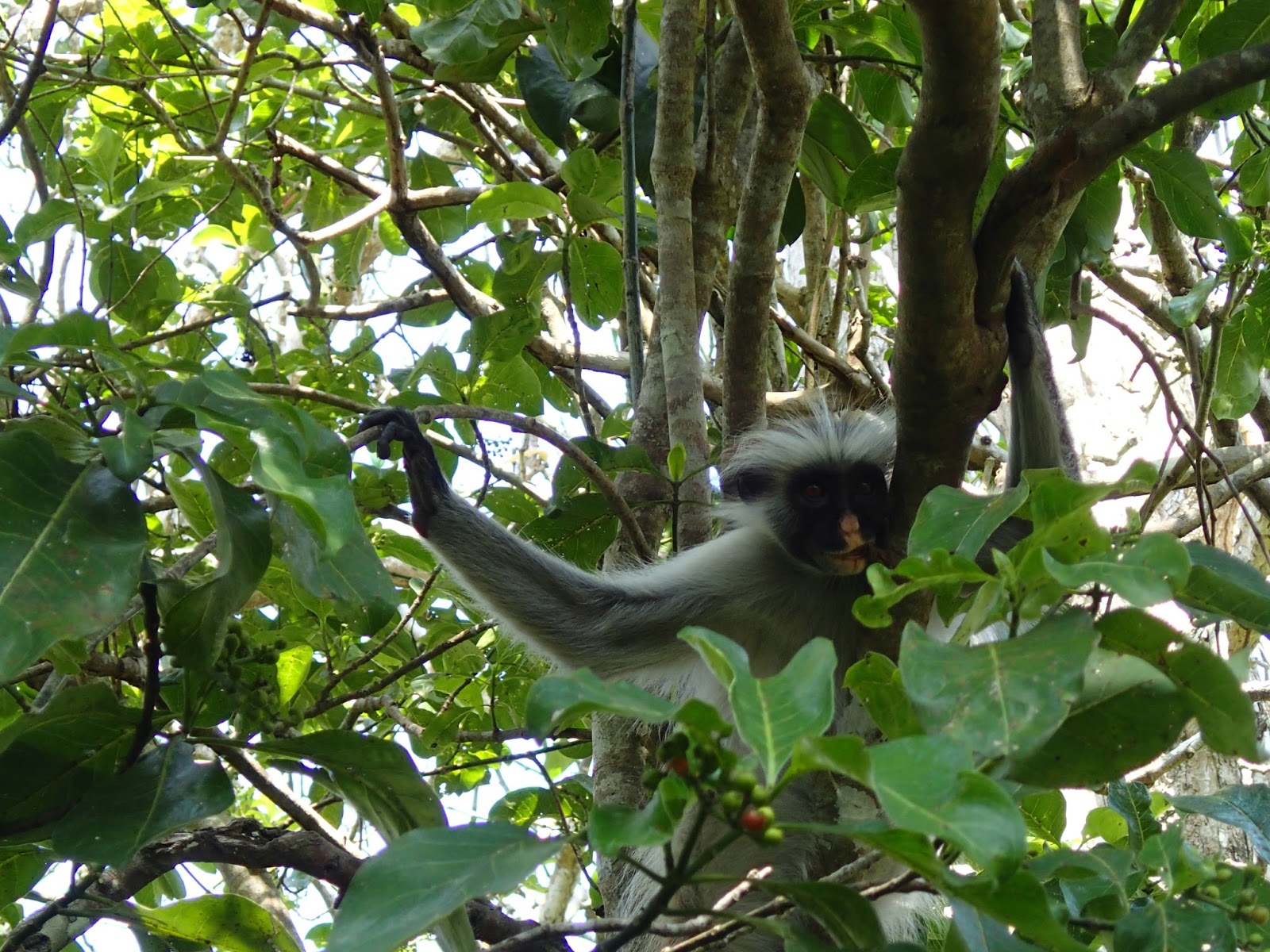
The Zanzibar Red Colobus monkey is unable to process sugar, like me!
It is official. I have a new favourite animal. Not only are they adorable with killer hair-dos, they, like me, cannot process sugar.

I was lucky enough to visit Jozani Forest which was the best thing I did in Zanzibar. Not only do I love forests of any description, but it was so unlike any place I have been before. The forest is humid, lush and teeming with life, with immense mangroves that you can explore via a boardwalk. It is the largest remaining stand of forest on Zanzibar and an essential habitat for so many creatures, from land to ocean. The National Park authority works with local communities and it seems to be a real success story in ecotourism supporting local enterprise and conservation. One initiative is teaching local people to farm butterflies which are purchased from them for the butterfly park and sale overseas.

The forest is home to endangered Zanzibar Red Colobus monkeys. Sadly, because of the small habitat and threats due to road traffic, these monkeys are listed as endangered. The Colobus around the walking trails are used to visitors, so unlike the Black and White Colobus in Arusha, you can get close without disturbing them. I was  delighted when my ranger guide informed me that they only eat leaves and unripe fruit because they cannot process sugar! While I use insulin to get around this, they eat charcoal to help process trace amounts of sugar. In that moment I wished desperately I could communicate with the monkeys to lament our bodies and their sugar processing abilities. The cruelty of living in a forest with jackfruit and mango abounding and we cannot eat it without medical intervention! I found my kindred animal.

This monkey gets me. How I feel when I'm hypoglycemic... or hyperglycemic.
Beautiful Vine Snake in Jozani Forest.  

2 January 2016

Unguja. Zanzibar.


Hello from the beautiful island paradise of Zanzibar. Jarrod was conveniently sent here for work and school is closed, so guess who got to join him.

Zanzibar is still Tanzania but is considered a semi-autonomous region. They have their own parliament and leader. Currently there is no parliament due to
disputes after the elections in October, and people tell me that a re-election may be years away. This unrest saw a lot of media attention and has deterred visitors, however peacefulness seems to be reigning and people tell me the “shida” or “trouble” was sensationalised.
Stonetown alleys.

Zanzibar has an interesting history and has been an active trade hub for the Middle East since the 8th century. You can see this influence permeating every aspect of life here, from historic ruins to the spiced food to the mosques. Stonetown is made up of narrow alleys, mostly painted white, with ornate carved doors serving as the entrance ways to buildings. It is stiflingly humid and hot, which suits the atmosphere of the environment beautifully. The food is fresh and delicious and the people are warm and kind. Getting lost wandering through the alleyways and marketplace is safely intrepid and a wonderful escape; a completely different feel to Arusha in mainland Tanzania where we live. 


Finding a ledge to check my blood sugar.
Wandering through any busy town is always tricky in terms of blood sugar checks. I try and make the most of convenient opportunities, such as stopping for lunch or right before hopping out of the taxi (or tax as they say here). Needless to say, sometimes you just have to get over it and test or inject on the street, regardless of whose looking. Generally I find no one expresses anything more than a mild curiosity. In fact, I think the locals enjoy seeing the flaw in someone who they previously perceived as a rich and privileged mzungu (foreigner).  I think that perhaps when locals see me testing or injecting they think, "Oh, her life is a bit shitty too sometimes."  I feel this minor display of vulnerability creates a little bit of shared humanity that transcends any preconceived differences. Anyway, island hopping and blood testing calls. 


Flying into Zanzibar with Jarrod as pilot.
 
Kitenge and alleys.


Kuanza. To Begin.


Many people have said to me I should keep a blog. I can understand why. Life has been fairly tumultuous this last year and a half and people are curious. The internet is full of adventurous, healthy ,young people blogging about their travel, so I think my situation is unique in doing this with the odds stacked a little bit more against me. Until now though, I think I have needed time to process just what has happened, and come to terms with how much my life has changed.

A few weeks ago I was pulling out of my drive, trying to get to work, and two Massai men walked by with their flock of goats. While I was waiting for them to pass I pricked my finger and checked my blood sugar before the chaos of the day began. Something came upon me and I saw this through the eyes of others. The beauty of the scene; the bag of needles and supplies on my lap and my vulnerability in being here, the Massai in their red checked shukas and tyre sandals, the bells of the goats chiming and the lush surrounds caused by the rains, all with Mt Meru looming. Suddenly I felt the need to share what has become my normal.

Kwa nini? Why? I hope this blog will be therapeutic for me, and I am excited about documenting my experiences. I hope this blog will reach one other T1 diabetic and give them one piece of useful advice. I hope that this blog will help one person make a difficult decision about pursuing an opportunity. I hope this blog will help one person realise that despite your challenges, there can be ways to work around them and with them. I hope this blog will help someone who finds themselves in a similar situation to me 18 months ago, and make them feel a little bit less alone. I hope it will make someone laugh. I cannot believe the changes in perspective that occur going from perfect health to “not,” and I hope I can share what I have learned. 

First post. I hope someone reads it. If you are a friend who knows me but did not know about all these changes, I’ll end with this quote that resonates strongly with me nowadays.  
Cheesy? Yes. True? Absolutely.

“Be kind. Everyone you meet is fighting a battle you know nothing about.” Ian MacLaren

Dusty African sunrise on my morning commute.